Great photos touch millions, conveying more than words. They capture miracles and disasters, often featuring children in joy and tragedy. Transcending language and distance, these enduring images change countless lives.
10. Vulture Waiting For Girl To Die
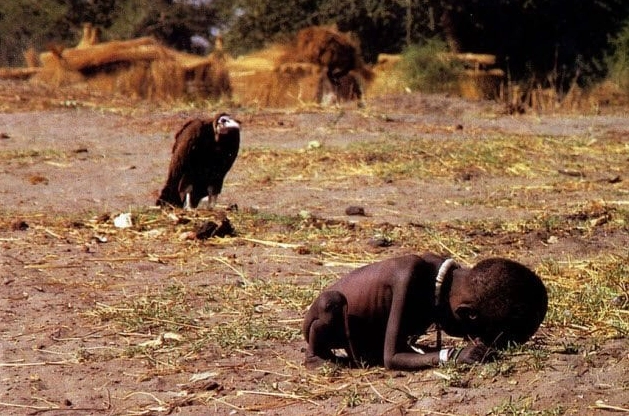
Title: The Vulture and the Little Girl, Ayod, South Sudan, 1993
Photographs reveal truth through light and timing. In 1993, an image published in The New York Times showed a starving child in South Sudan, too weak to stand, as a vulture waited nearby. Though the child reportedly reached a feeding center, the photo became a “metaphor of Africa’s despair,” forcing many to confront the famine.
The image also sparked outrage: why hadn’t the photographer, Kevin Carter, helped the girl? He chased the vulture away but did not touch her—partly because journalists were advised against contact to avoid spreading disease. The intense criticism haunted Carter, who died by suicide a year after taking the photo.
9. Young Syrian Refugee After A Failed Smuggling
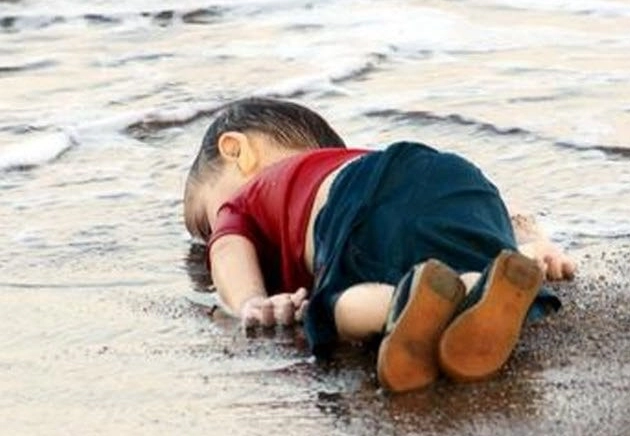
Title: Death of Alan Kurdi, Bodrum, Turkey, 2015
When photographer Nilufer Demir discovered two-year-old Alan Kurdi washed ashore, he appeared to be sleeping. She took the photo to give voice to “the scream of his silent body.” Alan was a Syrian refugee from a war that has killed countless innocents and displaced millions. His family’s story is tragically common: after fleeing to overcrowded, under-resourced camps, they were repeatedly denied safe relocation due to lacking connections or income.
In desperation, they paid smugglers for a place on an overloaded raft, which capsized soon after departure. Alan’s photo spread globally within a day, becoming one of the most powerful testimonies of a crisis many choose to overlook.
8. A Family In A Pea Pickers’ Camp During The Great Depression
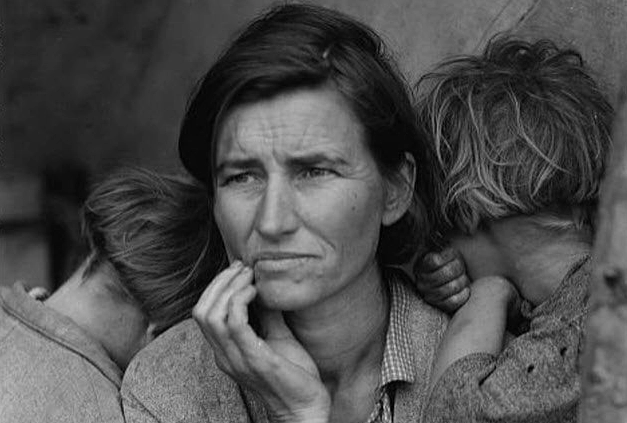
Title: Migrant Mother, Nipomo, California, 1936
This iconic photograph, nearly never taken, captures the power of visual storytelling. As photographer Dorothea Lange passed scenes of desperation during the Great Depression, she felt magnetically drawn back to a frozen pea pickers' camp. There, she documented Florence Owens Thompson, a 32-year-old mother whose face, worn with hunger and resignation, came to symbolize the era's profound despair.
Titled Migrant Mother, the image had an immediate and tangible impact. Upon its release, it prompted the delivery of 9,100 kilograms of food to the stricken camp. The photograph endures as the most famous image of that American era, a testament to a single picture's ability to convey the human cost of widespread hardship and to compel public action.
7. A Fall From A Building Captured On Camera
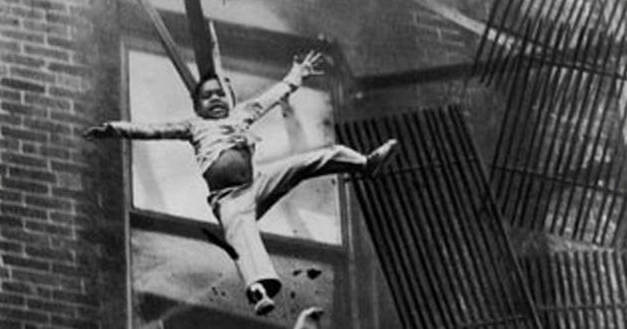
Title: Fire Escape Collapse, Boston, Massachusetts, 1975
Where should the line be drawn for releasing disturbing images? Photographer Stanley Forman captured a routine rescue that turned tragic when a fire escape collapsed, sending a godmother and her toddler goddaughter plummeting. He continued photographing their horrific fall but turned away before impact.
The godmother, Diana Bryant, died upon hitting the ground, but her body cushioned the fall for her two-year-old goddaughter, Tiare, who survived. Forman’s photographs won a Pulitzer Prize and sparked immediate nationwide debate on fire escape safety. This led to updated fire escape safety codes in numerous U.S. municipalities.
6. Girl Works In Cotton Factory Despite Child Labor Laws
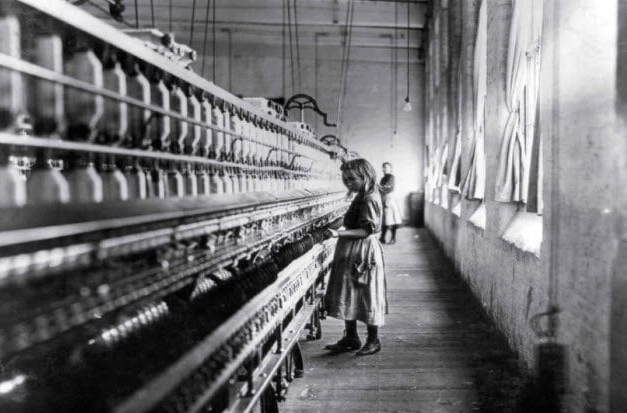
Title: Sadie Pfeifer, Lancaster, South Carolina, 1908
Lewis Hine was a muckraker determined to expose child labor abuses. He traveled across states, photographing children in factories and on streets, often gaining access by posing as a Bible seller or insurance agent despite facing threats. His work documented harrowing cases where children, deprived of education, operated dangerous machinery for meager pay.
One iconic subject was Sadie Pfeifer, a wispy girl dwarfed by a massive cotton machine. Such powerful images became the lynchpin of Hine's campaign, sparking crucial public debates and driving the movement for child labor law reform.
5. Iraqi Girl Crying After Her Family Died At A Checkpoint
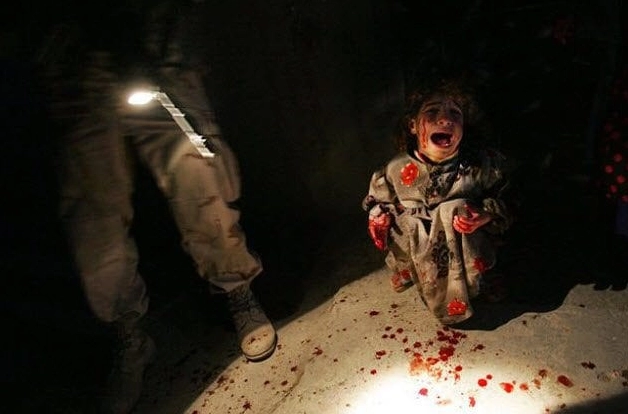
Title: Iraqi Girl at Checkpoint, Tal Afar, Iraq, 2005
A five-year-old girl, blood-spattered at an Iraqi checkpoint, embodied a wider tragedy. In 2005, Samar Hassan’s parents were shot by U.S. soldiers who mistakenly feared a car bomb. Such arbitrary civilian casualties were common, as troops had broad license to protect themselves.
Photographer Chris Hondros captured this pivotal image, one of the few from the war to pierce Western consciousness. Defying suppression orders amid tight control and danger, his photo revealed civilian suffering, sowing public skepticism. It reached the Pentagon and ultimately changed checkpoint policies. Hondros later died covering the 2011 Libyan civil war.
4. Jewish Boy Surrenders In A Ghetto Roundup
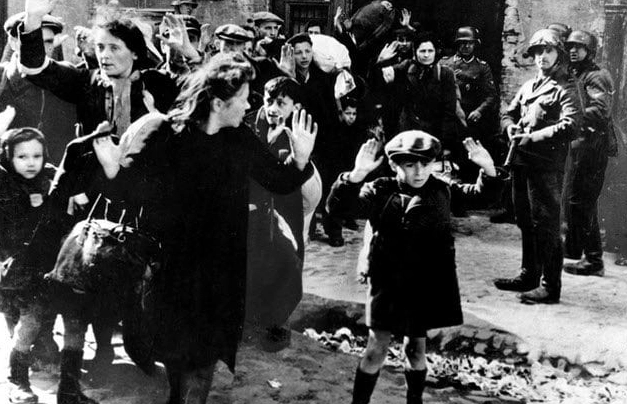
Title: Jewish Boy Surrenders in Warsaw, Warsaw, Poland, 1943
No name has been confirmed for the Jewish boy, arms raised in surrender in the Warsaw ghetto—a prison of starvation and death. On April 19, 1943, its desperate inhabitants launched a sparsely armed rebellion. The Germans responded with tanks and flamethrowers. The boy, no older than ten, was among the 56,000 survivors later executed or deported to camps.
His photograph was taken by Nazi SS General Jurgen Stroop, who boastfully compiled it in his "Stroop Report" to document crushing the ghetto. These images later became key evidence in his war crimes trial, giving faces to Jewish suffering. Stroop was hanged outside Warsaw. The anonymous boy now stands for six million defenseless Jews who perished.
3. Children Fleeing From Mistaken Bombing
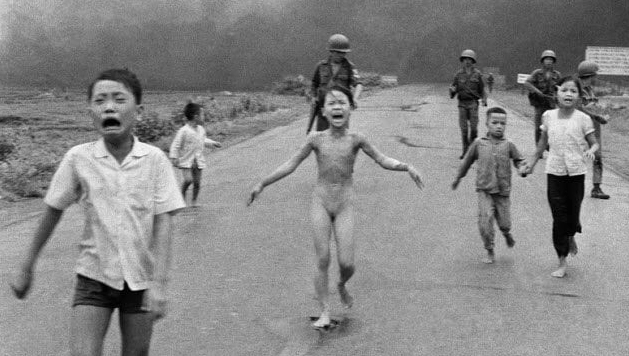
Title: Napalm Girl, Trang Bang, Vietnam, 1972
U.S. bombers mistakenly attacked a Vietnamese village with napalm, causing children to flee. Among them was a girl whose clothes were burned off, screaming "Too hot!" Photographer Nick Ut captured the scene as she ran toward him.
The image, known as Napalm Girl, graphically revealed the brutal reality of friendly fire and the war’s harm. It became one of the most influential war photographs, starkly showing the conflict's devastating impact.
2. First Picture Of Fetus Within The Womb
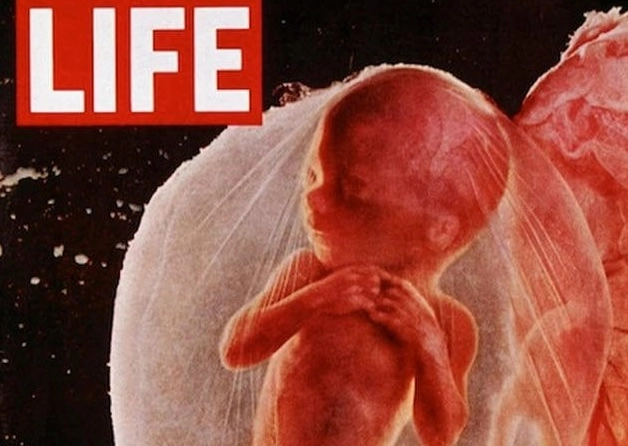
Title: The Drama of Life Before Birth, Stockholm, Sweden, 1965
For the first time, the public witnessed a developing fetus, dispelling pregnancy myths and sparking amazement at the photographer's technique. Life magazine's eight million copies sold out instantly, raising the profound question: when does a fetus become human? Lennart Nilsson dedicated 12 years to this impossible feat.
He could not have predicted creating a historic moment, now an iconic image in the life vs. choice debate. While never taking an open stand on abortion, Nilsson stated, "I am grateful if I have contributed to increasing the respect for life."
1. Japanese Bombing Of Fleeing Chinese Refugees
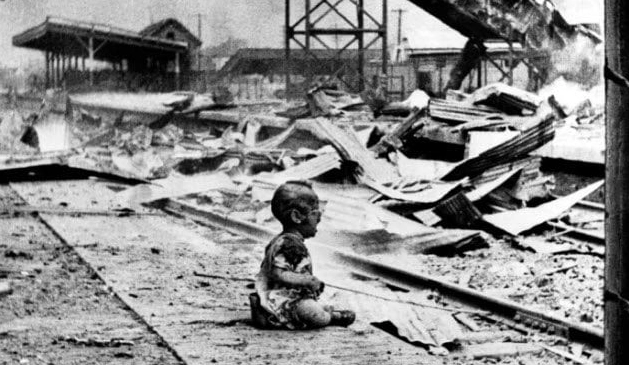
Title: Bloody Saturday, Shanghai, China, 1937
The "Bloody Saturday" photograph, taken after Japanese bombers struck Shanghai's railway station on August 28, 1937, transcended distant headlines. While Japan's brutal invasion of China seemed remote to most Americans, this image made the tragedy visceral. Photographer H.S. Wong captured the scene amidst the carnage, including a lone baby crying on the tracks beside its dead mother, before rendering aid.
Published globally, the haunting image shocked the American public, personalizing the war's devastation for over 130 million people. It galvanized widespread sympathy and condemnation toward Japan, becoming a landmark piece of anti-war sentiment and a significant factor in shifting U.S. opinion, ultimately contributing to America's path toward entering the conflict.
Related Articles

The US stock market has come to an end!
This year has seen a strong performance in U.S. technology stocks, with the six major tech stocks (Microsoft, Apple, Nvi...
Why We Let Go of Big Bull Stocks Too Early
Why do we always let go of big bull stocks before they peak? Discover the psychological traps and proven strategies to h...

Who are the people who can make money in the A-share market?
The OPEC+ organization recently held a meeting and decided to extend the collective production cut measures until 2025, ...

What is Volume in Stock Market? A Practical Guide with Examples
What is volume in the stock market and how can real examples improve your trading? This guide explains volume analysis w...

It's a great time to layout this sector!
I believe the gap between people and the gap between companies mainly lies in the size of their vision. That is, when de...